


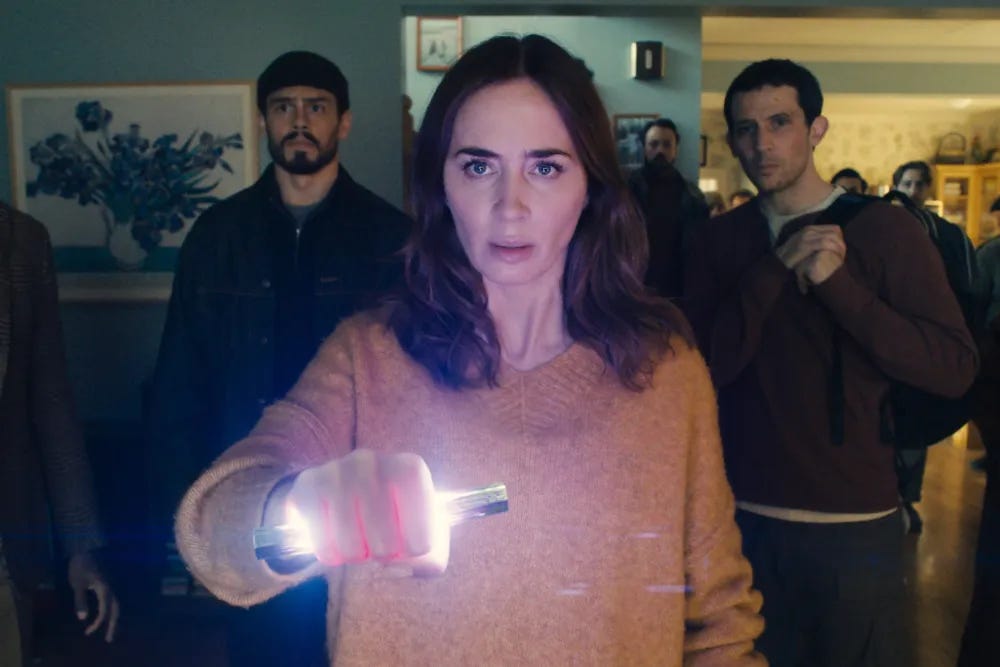
Attention fragmentation is affecting all of us, on every level, in every direction.
I remember when I was growing up, adults complained that music videos on MTV were destroying our attention spans. 2000 years ago, the Romans complained that there were “too many books.” Clearly these complaints aren’t new.
But—algorithmically optimized feeds are different. If you look at something, it thinks you like it. So it keeps serving it up. Feeds are optimized for engagement. Anytime you hear someone say something like, “I don’t know why, but I keep getting Sabrina Carpenter in my feed. Crazy!” you can rest assured that it’s not crazy. They simply don’t scroll past Sabrina when she randomly pops up in their feed. They look at her photos and watch her videos and listen to her sound bites of how crazy it was backstage that one time. The goal is, “how do we get this person to never put their phone down?” It reminds me of a book that’s too long for me to read called Infinite Jest. In it, someone creates a movie that’s so entertaining, people never stop watching it. They do stop eating, sleeping, and doing everything else. They just sit there, watch the movie endlessly, and die.
Huh.
The true worst part about this is that if Zuckerberg and company wanted to, they could optimize the feed for nutritional value rather than engagement. Imagine a world in which—even for a single month—the things that dominated your feed were the most scientifically effective tips and tricks to have an expansive and beautiful life as a human being.
That sounds cool, but also—why was it so crazy backstage that one time?
The problem is that it’s all happening too fast for us to acclimate. Our species evolved over hundreds of thousands of years. We’ve gone from zero screens in existence to one screen in virtually everyone’s pocket all day, every day in less than 100 years.
Now let’s talk about how this problem is killing the movie industry.
Robert McKee wrote a book called Story. It’s brilliant. It breaks down why certain stories are compelling—and why others aren’t. Here’s a quote from it that resonated with me, and inspired this article:
We go to the storyteller with a prayer: “Please, let it be good. Let it give me an experience I’ve never had, insights into a fresh truth. Let me laugh at something I’ve never thought funny. Let me be moved by something that’s never touched me before. Let me see the world in a new way. Amen.”
I read that and put the book down and had a 30-second existential crisis at the feeling of, “Oh my God, that’s so true!” McKee was able to put into a single paragraph what I feel like I’ve been saying over the course of 20-minute rants for months.
Disclosure Day was lazy because it violated all of this. It wasn’t a new experience.1 There are no fresh truths. There’s nothing even close happening in the film that could possibly allow me to see the world in a new way.2 It’s laughable to even consider Disclosure Day an “original story.” Technically yes—spiritually, not even close.
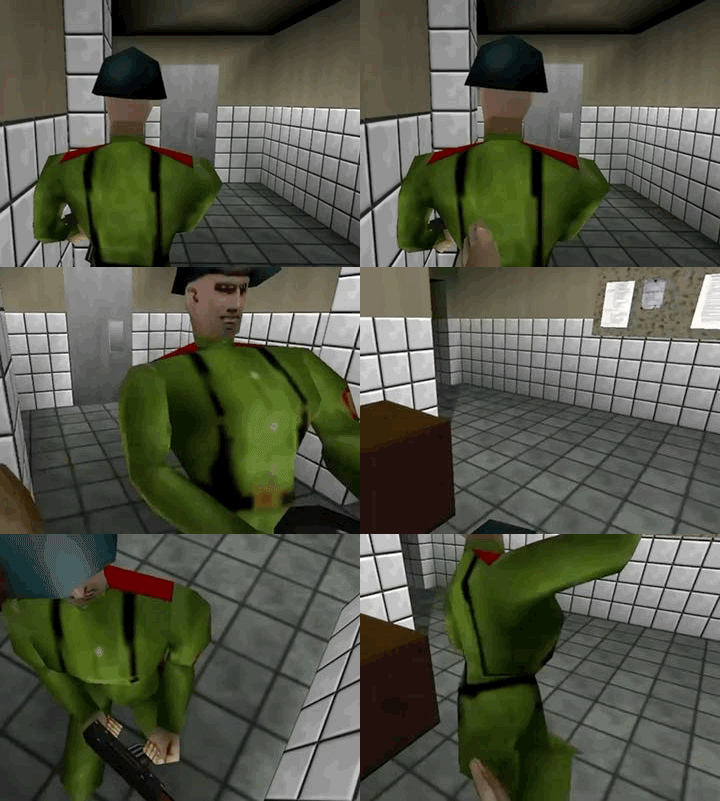
And don’t even get me started on how oddly clunky the blocking of the actors was:
This isn’t a detail that I should have ever noticed, but I couldn’t help it. At several key moments, the position of the actors was so implausible as to feel like an episode of Scooby-Doo. Hiding behind bushes and running obviously along fences like they were breaking into an enemy compound in the first level of Uncharted. The bad guys, oblivious as all hell, with the IQ of 1995 video game henchmen.
We also need more consistent rules with our alien technology. Touch it—and it allows you to overtake the mind of another person. Okay, that’s interesting. Also, it allows you to turn invisible. Okay, but how does—also, it serves as an emergency backup power source in case your news station is sabotaged by the bad guys. Get the fuck out of here with this alien Swiss Army Knife bullshit.
Why am I writing about this?
This is a problem that can be fixed.
Look—storytelling is hard. I’m sure there were script issues and production issues and post-production issues—as there are on every film. But all that means is that we should be tough but fair with our fellow artists. Even (and especially) with icons like Spielberg. Honest feedback is the only chance we have to hone our craft. We owe it to each other—and our audience members—to hold each other’s feet to the fire and say: this can be better. This should be better. This has to be better. And not just a little bit—like, Top Gun: Maverick better. A 10% improvement of Disclosure Day wouldn’t have moved the box office needle from the $44 million opening weekend. But a 50% improvement would have. Beautiful trim on foundational blandness doesn’t cut it. The sharpest cinematography paired with the best actors isn’t enough if the script isn’t there. We need better counter-argument monologues about the actual dangers of disclosing the existence of aliens. While Jane was explaining how disclosing could upend the very idea of religion as we know it, all I could think was: “I don’t buy it. God created humans. He also created aliens. Every priest will say this and religion will carry right along. Argue better.”
We need writers who are paying more attention to the world and sharing their findings in such a way that forces us to say: “Oh my God, that’s so true.”
I get it, though. Truth is hard to come by these days. But the truth is out there. It’s just that fewer people are paying attention—both artists and audiences. Because it’s hard to know what’s real when you’re staring at a feed all day that’s convincing you that you’re looking at objective reality, when really, you’re looking at a reality-of-one. Curated by algorithms that are designed by minds far smarter than most of us—with the sole purpose of keeping us from looking up.
For all we know, a fucking UFO has literally flown over our heads.
But we’d never even know it.
If Disclosure Day were an X-Files movie, this might have been my favorite movie of the year—because it would have tied into an existing property and fit the themes and concepts that X-Files brilliantly popularized. I would have loved to see Mulder and Scully running around and finally getting the ending they deserved. Lord knows they know how to duck behind a shrub (best wishes to Ryan Coogler on his TV reboot!).
It’s so milquetoast (!! that’s how you spell that !!) that it reminds me of how the Veep show-runner said that in the era of Trump, they had to constantly alter their storylines because reality was consistently outpacing their most insane ideas.